

The Coupe Plate
To some it's just a plate. To others, it holds so much more than food. Designed by Edith Heath in the 1940s, the Coupe plate has been in continuous production ever since. Made for humans, by humans, in Sausalito, California.
Come with us to Sausalito, to our dinnerware factory, as we follow the plate through production.
Come with us to Sausalito, to our dinnerware factory, as we follow the plate through production.
Making the Clay
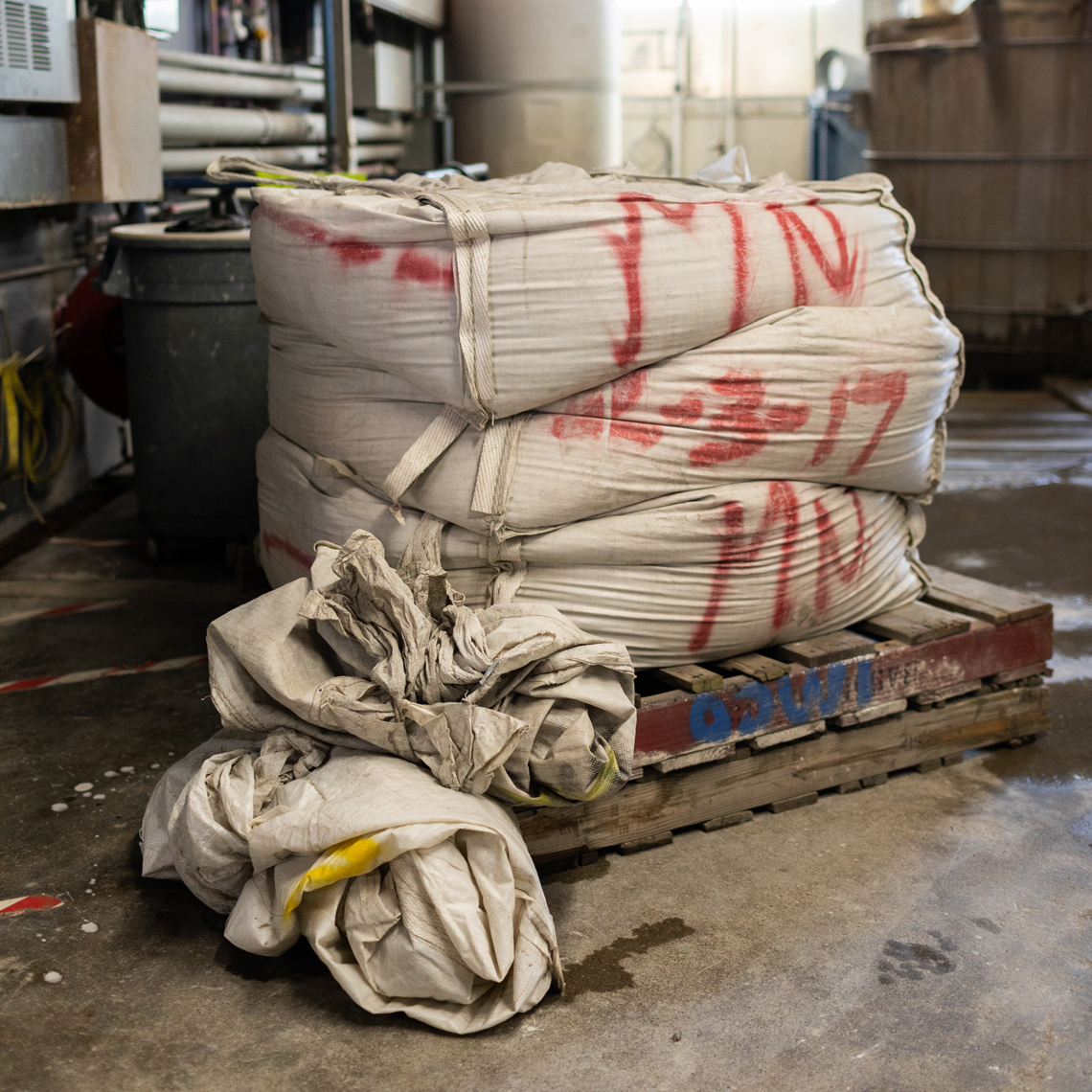
Dry clay arrives at the factory in 600-pound bags. Imagine a whole lot of cake mix!
The clay is mixed with water in the blunger—picture a giant stand mixer–for about two hours. Just like baking, the consistency of the slurry is important to the final product.
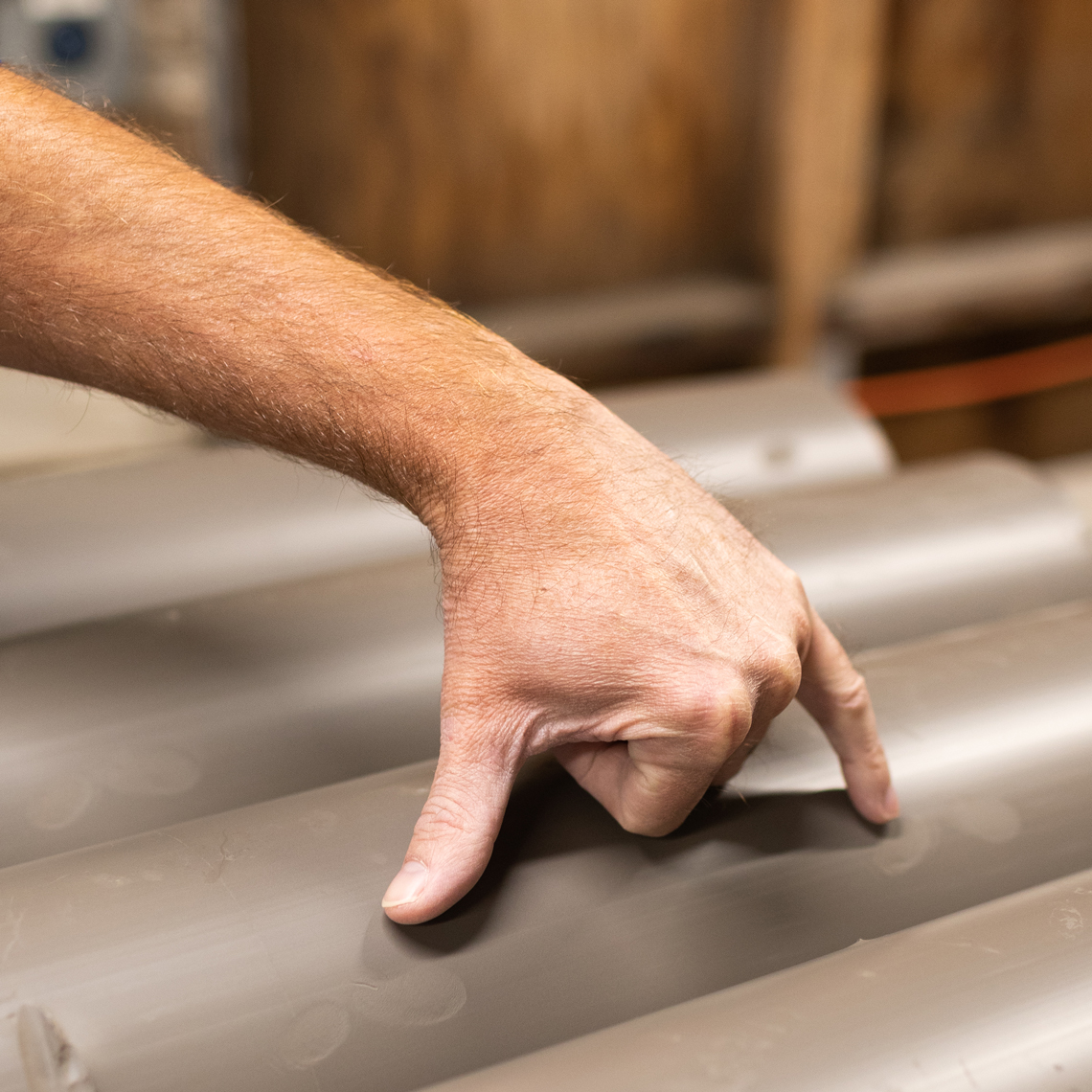
The slurry is pumped into a hydraulic press, which forces out the water to form filter cakes. These waffle-like cakes of clay make their way to the pug mill, to be extruded into tubes, or pugs.
The clay is mixed with water in the blunger—picture a giant stand mixer–for about two hours. Just like baking, the consistency of the slurry is important to the final product.
The slurry is pumped into a hydraulic press, which forces out the water to form filter cakes. These waffle-like cakes of clay make their way to the pug mill, to be extruded into tubes, or pugs.
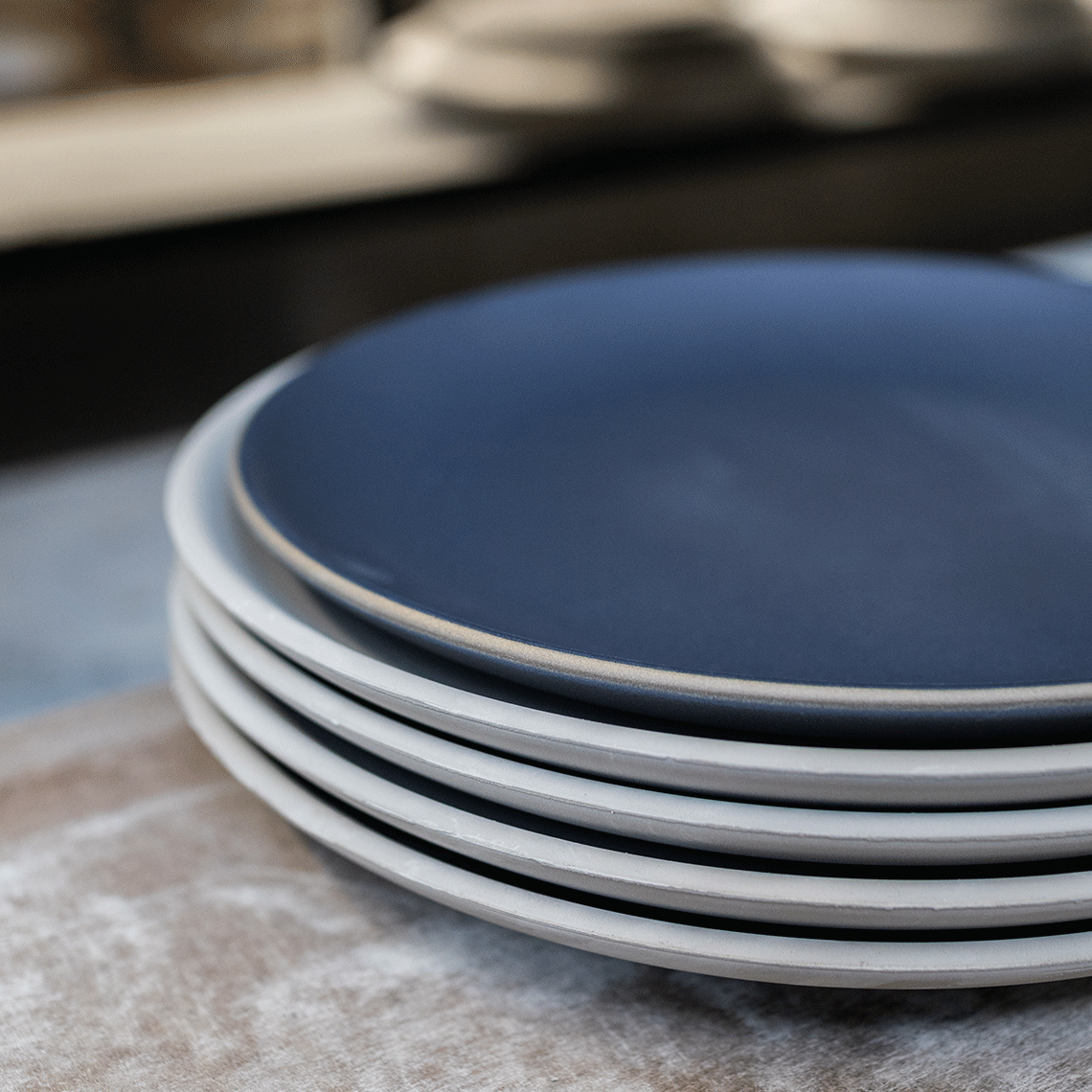
Forming the Plate
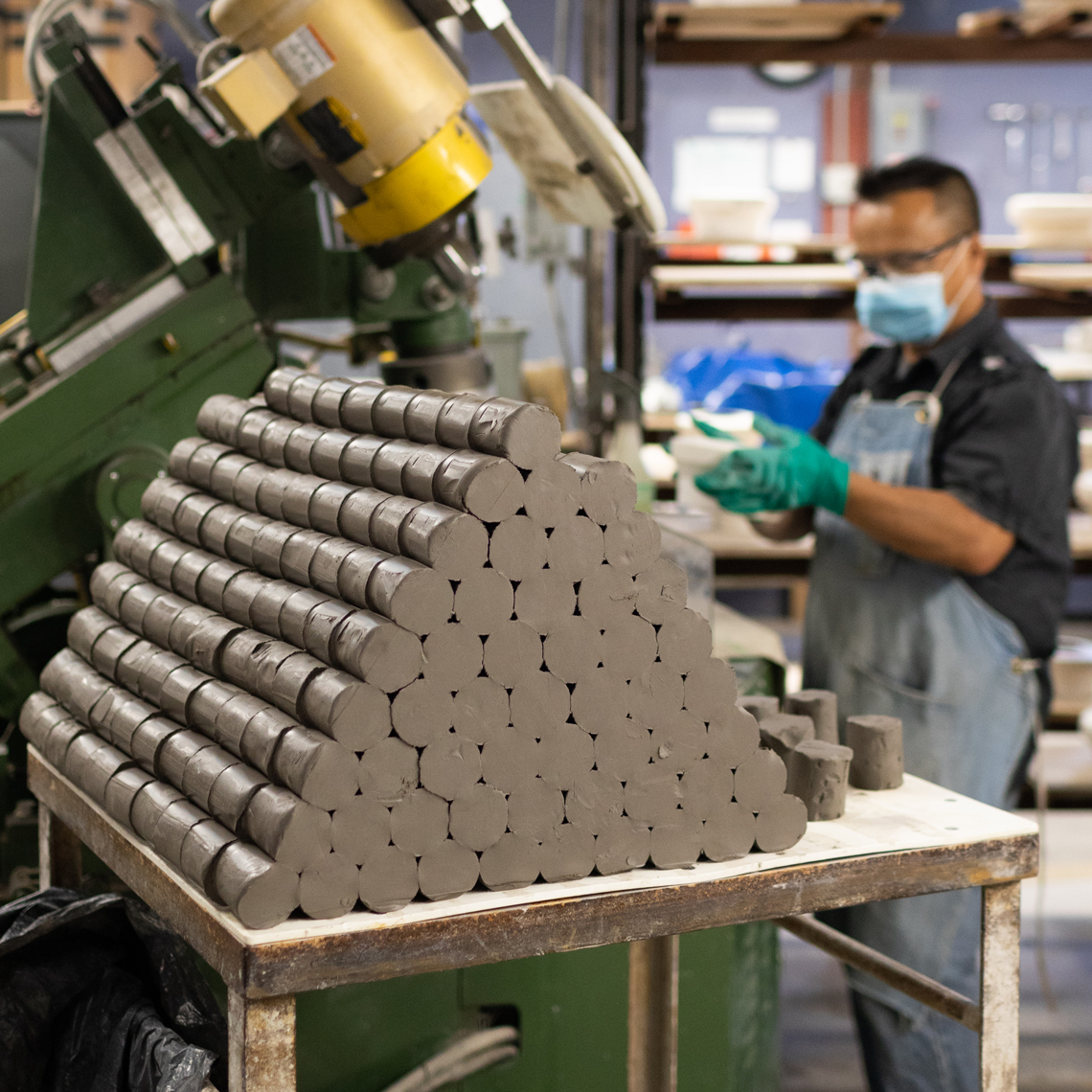
Hector receives the pugs at the forming station. Each is roughly 25” long and 6” in diameter (for a Coupe plate). They’re fed through the cutter and made into smaller round cakes, used directly on the SKK or plate machine.
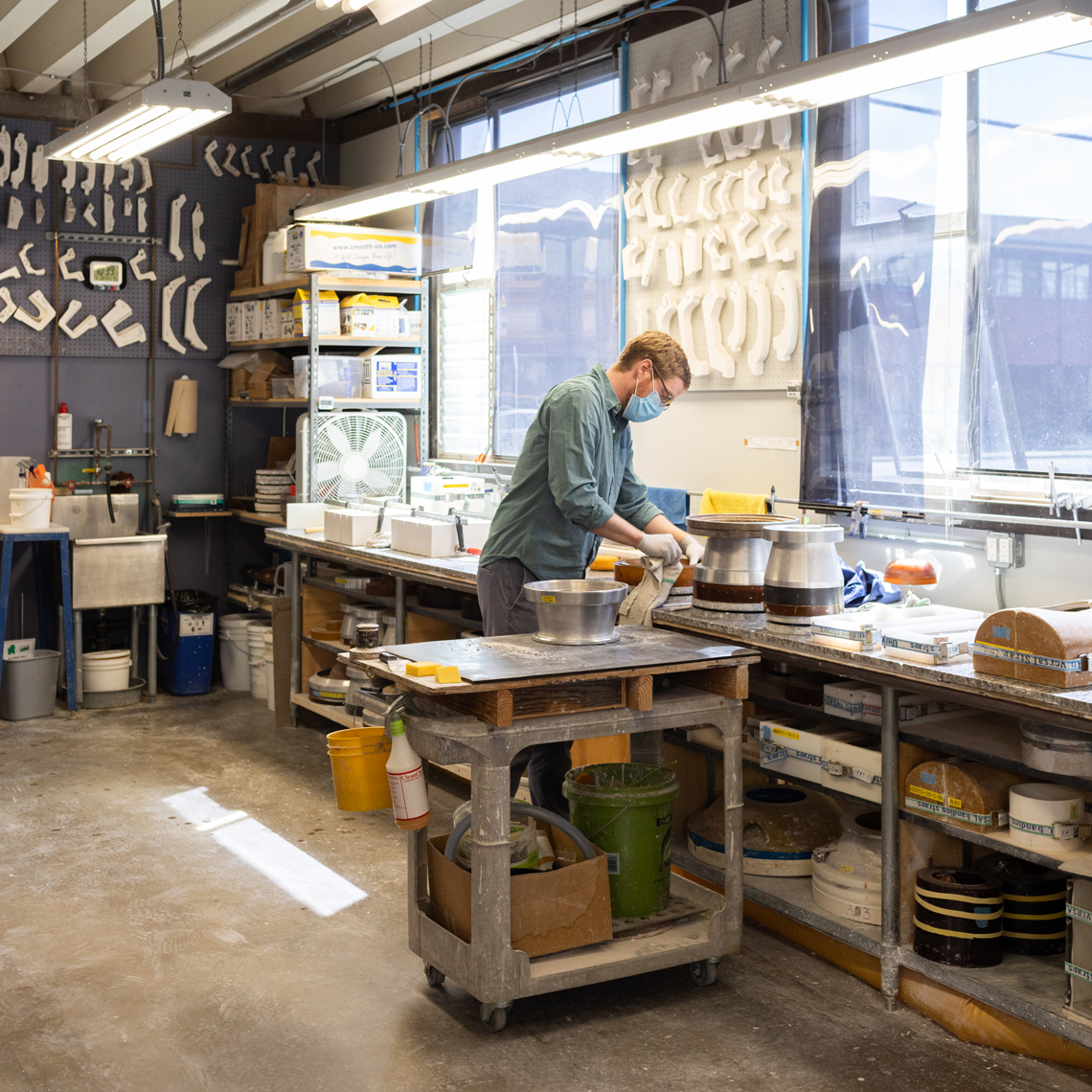
Plates are jiggered. Jiggering is forming from the top down, where jollying is forming from the bottom up (bowls are jollied).
A freshly formed wet plate is roughly one inch larger than the finished one on your dining table. There’s shrinkage in firing.
Plates are jiggered. Jiggering is forming from the top down, where jollying is forming from the bottom up (bowls are jollied).
A freshly formed wet plate is roughly one inch larger than the finished one on your dining table. There’s shrinkage in firing.
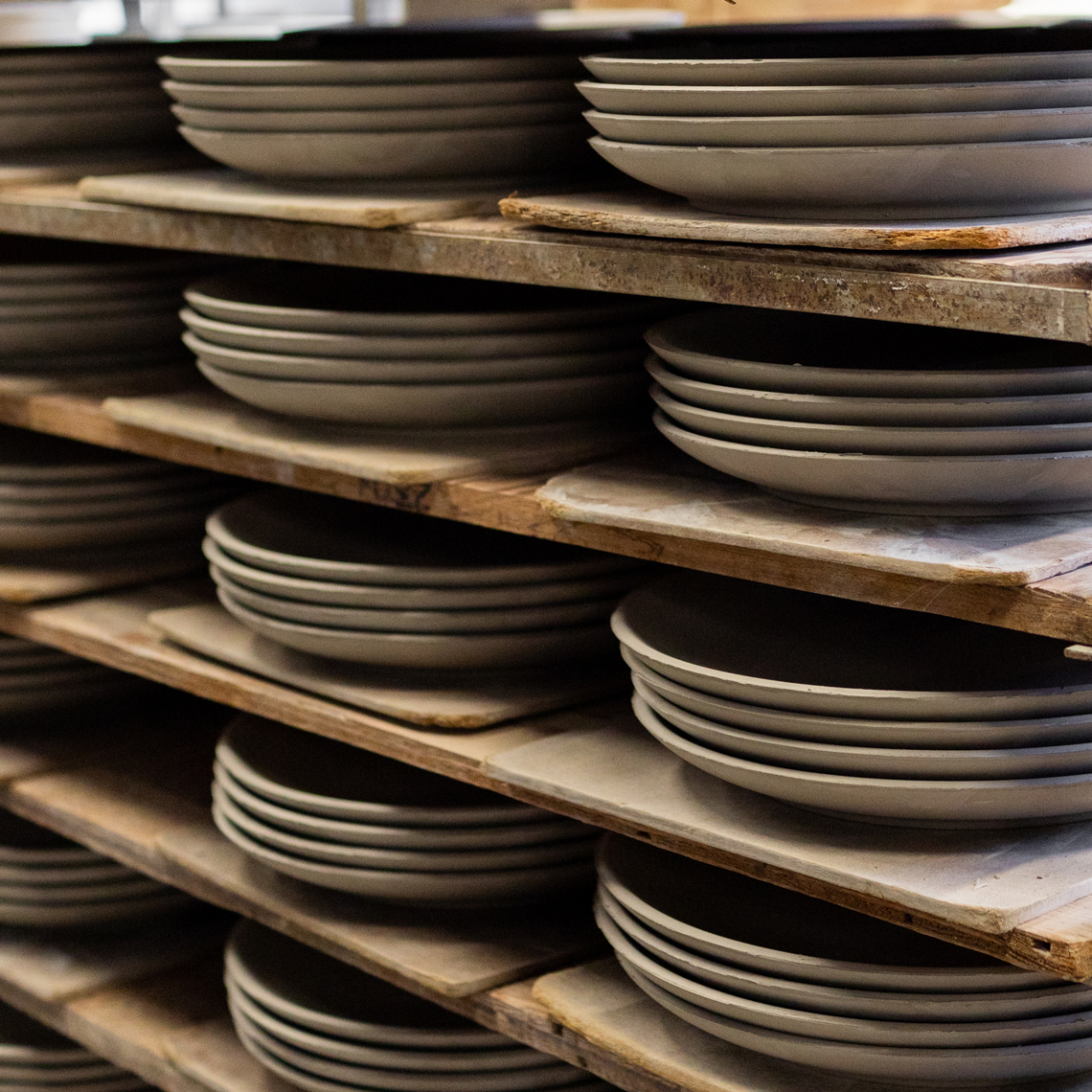
Drying and Trimming
The formed, untrimmed plates are hand-stamped with a Heath Ceramics mark. They’re placed in a dryer that resembles a rotisserie chicken oven, but with warm air, no fire, and no chicken. With time, the dryer turns the plate’s consistency into greenware, as its moisture is removed.
Muang then trims the plates by hand. Placed on a wheel, the plate spins, and she uses a tool and pressure that’s just right to scrape the unfinished edges into the smooth, rounded-ones of a finished piece.
If a greenware pieces breaks or is mis-formed during this stage, the pieces are recovered and returned to the blunger. Zero waste!
Muang then trims the plates by hand. Placed on a wheel, the plate spins, and she uses a tool and pressure that’s just right to scrape the unfinished edges into the smooth, rounded-ones of a finished piece.
If a greenware pieces breaks or is mis-formed during this stage, the pieces are recovered and returned to the blunger. Zero waste!
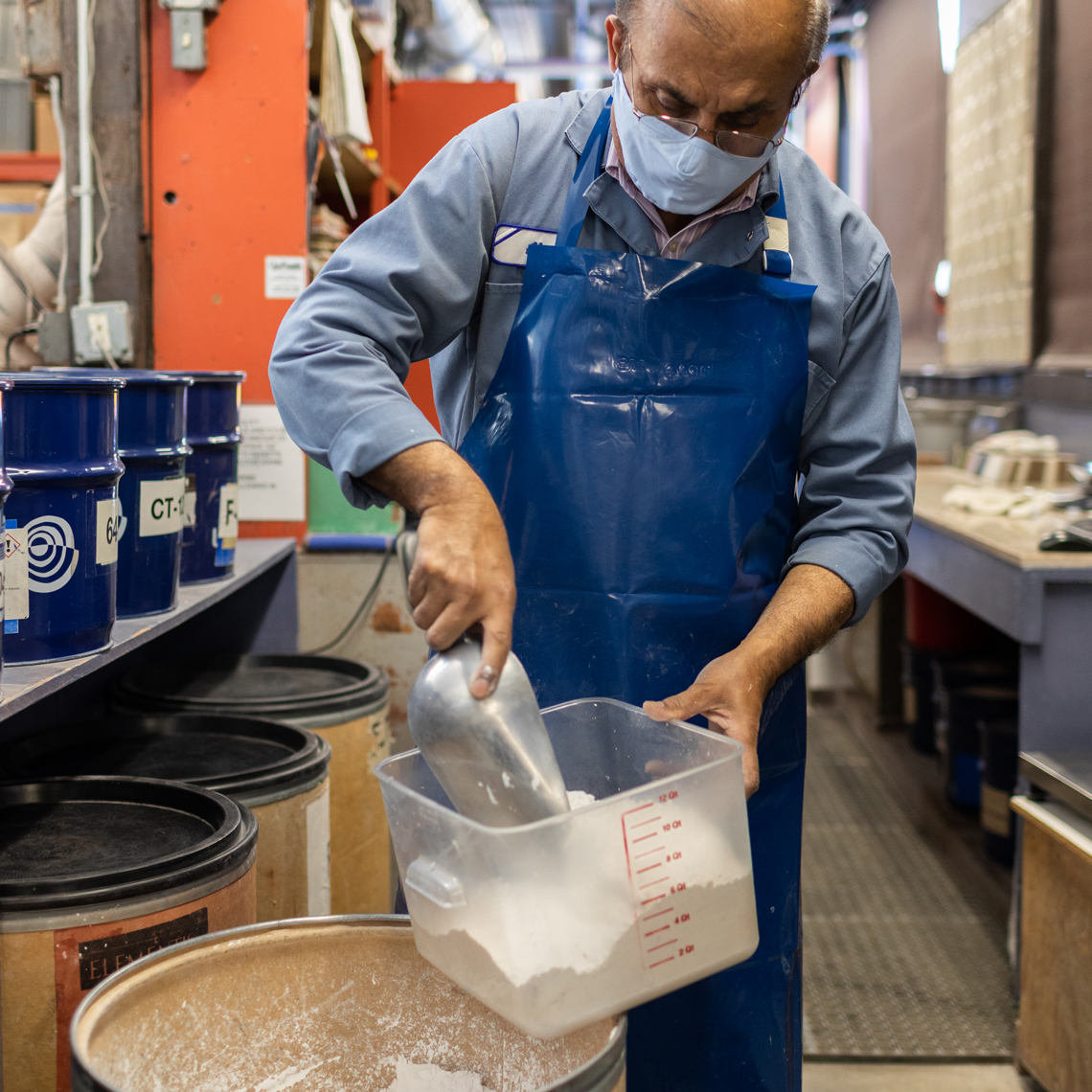
Glazing & Wiping
Tommy tap-centers each plate, then sprays a specific amount of glaze in a specific pattern for each piece. Every glaze is nuanced in how much and where it’s applied. Some are forgiving, such as Linen and some will show every move he makes, such as Redwood.
If the glaze calls for a wiped edge, the rim of the plate is wiped by the glazer as it’s still spinning in their glaze booth.
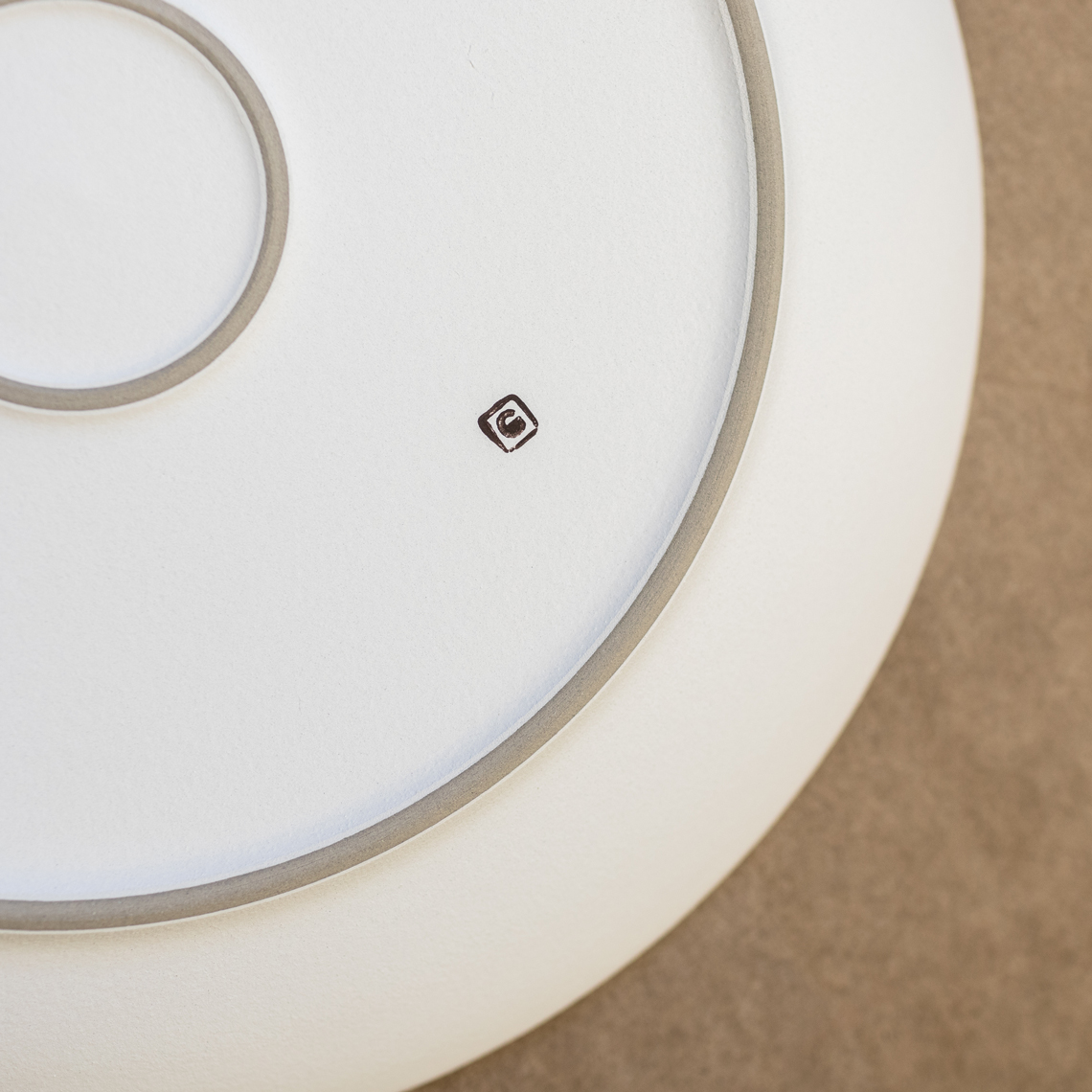
Once glazed, a maker’s mark is stamped on the bottom to identify the person who glazed the piece.
Fredy wipes the foot of each piece by hand on a belt to remove the glaze. If glaze comes in contact with the kiln shelves during firing, they will fuse together (this doesn’t make a very useful plate).
If the glaze calls for a wiped edge, the rim of the plate is wiped by the glazer as it’s still spinning in their glaze booth.
Once glazed, a maker’s mark is stamped on the bottom to identify the person who glazed the piece.
Fredy wipes the foot of each piece by hand on a belt to remove the glaze. If glaze comes in contact with the kiln shelves during firing, they will fuse together (this doesn’t make a very useful plate).
Firing & QC
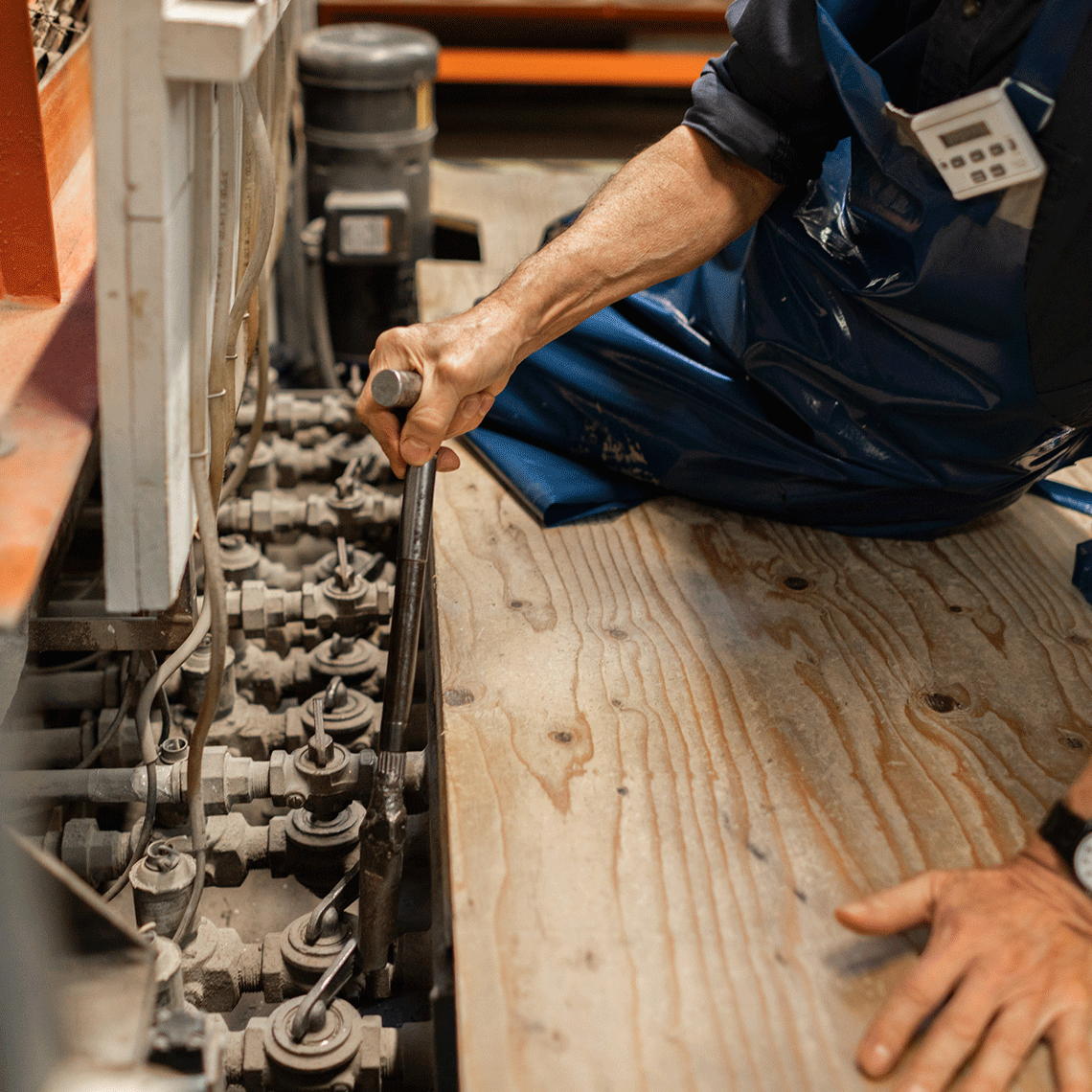
Like many home ovens, our Sausalito kilns have hot and cool spots, so each kiln is carefully loaded to ensure that each glaze is in its "happy place" and kiln-space is maximized.
Kilns are fired manually by a skilled fire person, who constantly adjusts the gas during the eight-hour fire to ensure it fires evenly.
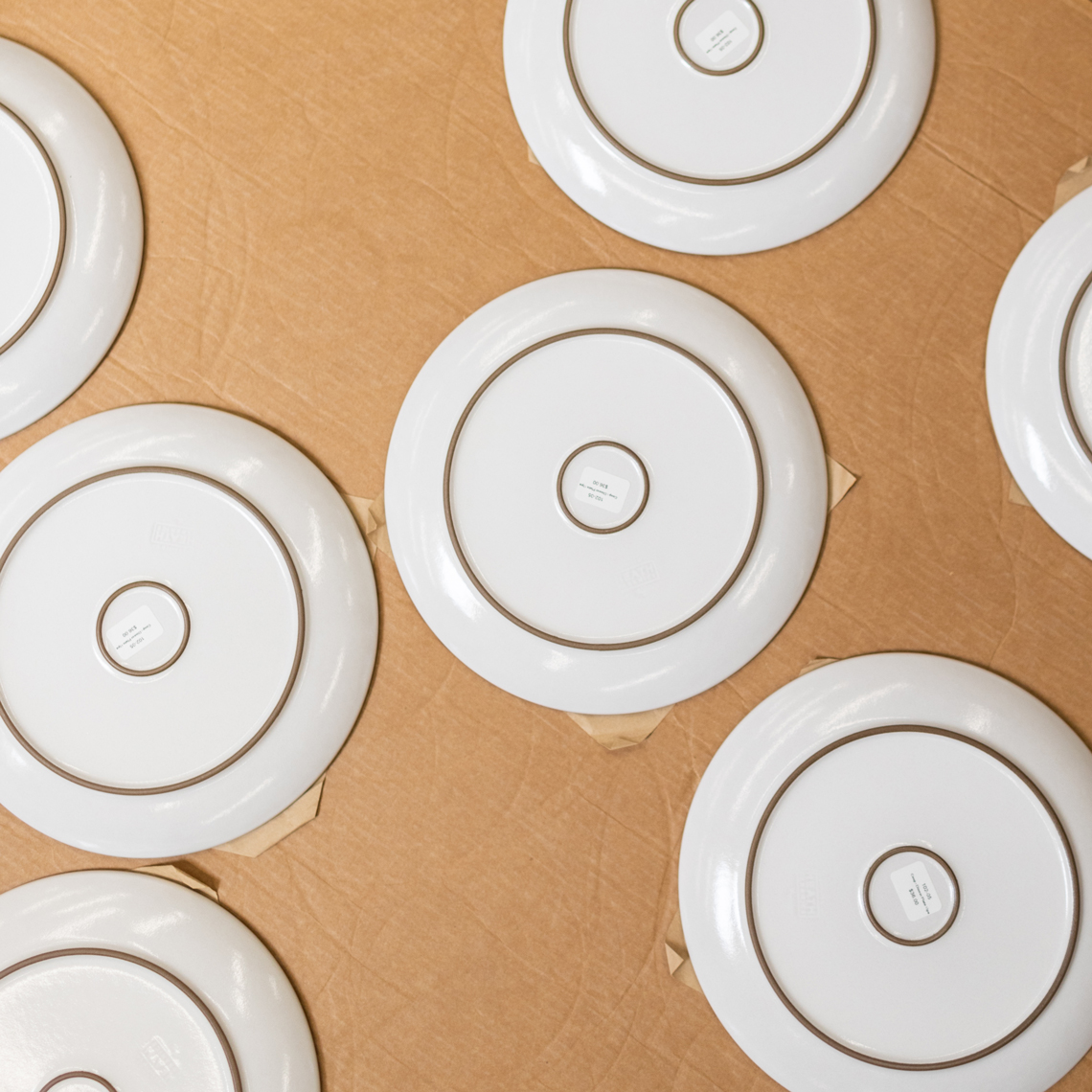
After the plates are removed from the kiln, Lai and the QC team inspect each plate for any flaws, and pass each plate as either a 1st or 2nd quality piece. They polish the bottom, add a price sticker, then load up our reusable pallets to be driven to one of our four California showrooms!
Kilns are fired manually by a skilled fire person, who constantly adjusts the gas during the eight-hour fire to ensure it fires evenly.
After the plates are removed from the kiln, Lai and the QC team inspect each plate for any flaws, and pass each plate as either a 1st or 2nd quality piece. They polish the bottom, add a price sticker, then load up our reusable pallets to be driven to one of our four California showrooms!
Thank you—
It takes 12 people with a combined 135 years of experience to make a plate. They are Leuw, Yao, Minhh, Hector, Muang, Ervin, Ali, Tommy, Fredy, Erick, Lai, Mauricio.
With gratitude to our team, for making these works of art, and to you for following along.
With gratitude to our team, for making these works of art, and to you for following along.
How it's made
Watch the whole process


