

If you love Heath, you love variation. After all, the two go hand in hand.
Every Heath glaze has some degree of variation, whether it’s in hue, saturation, or texture (just take a look at Pass the Plate, our vintage and resale platform, for proof!). The differences may be minuscule, but the bottom line is that no two pieces are identical. If you’ve ever wondered why that happens—and why we think it’s wonderful—here’s your guide.
Every Heath glaze has some degree of variation, whether it’s in hue, saturation, or texture (just take a look at Pass the Plate, our vintage and resale platform, for proof!). The differences may be minuscule, but the bottom line is that no two pieces are identical. If you’ve ever wondered why that happens—and why we think it’s wonderful—here’s your guide.
The Nature of the Materials
We cherish natural materials. Edith’s clay body forms the foundation of every Heath piece, and we continue to celebrate (and occasionally wrestle with) its idiosyncrasies today.
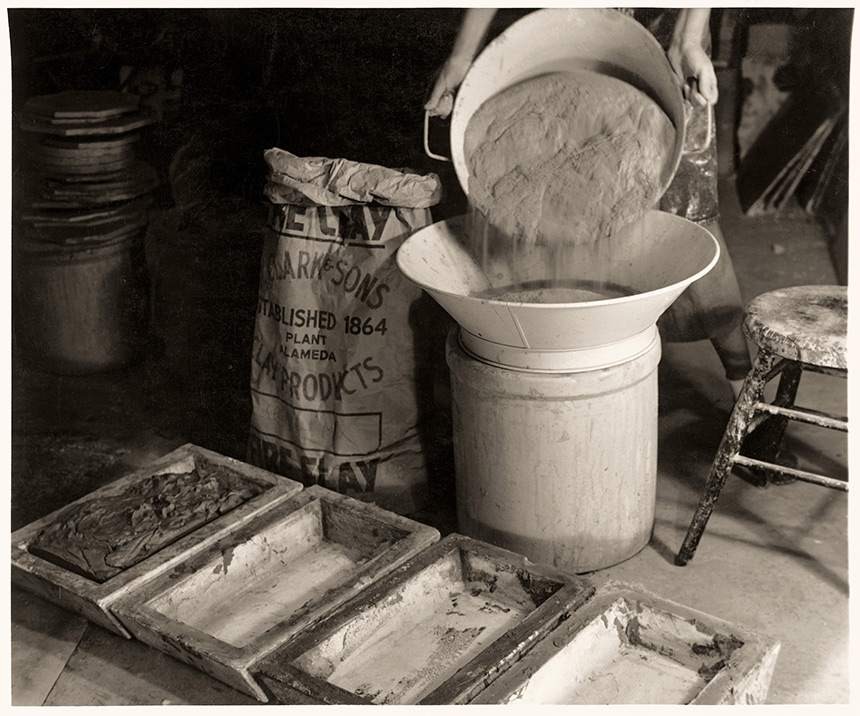
Nature is at once precise and imprecise, and the organic minerals and oxides in our glazes mean that products may change in look and feel over time. In fact, there might even be slight variation within a single batch!
Another factor keeping us on our toes is the ebb and flow of natural resources. If an ingredient we’ve used for decades suddenly becomes difficult to obtain, we have to seek out alternative materials or develop new recipes to preserve the character of each glaze.
Another factor keeping us on our toes is the ebb and flow of natural resources. If an ingredient we’ve used for decades suddenly becomes difficult to obtain, we have to seek out alternative materials or develop new recipes to preserve the character of each glaze.
A Personal Touch
Raw materials don’t amount to much without skilled hands to help them shine—that’s where our glazers come in. Each of these experts brings extensive training to the process, as well as their own skill, technique, and mark.
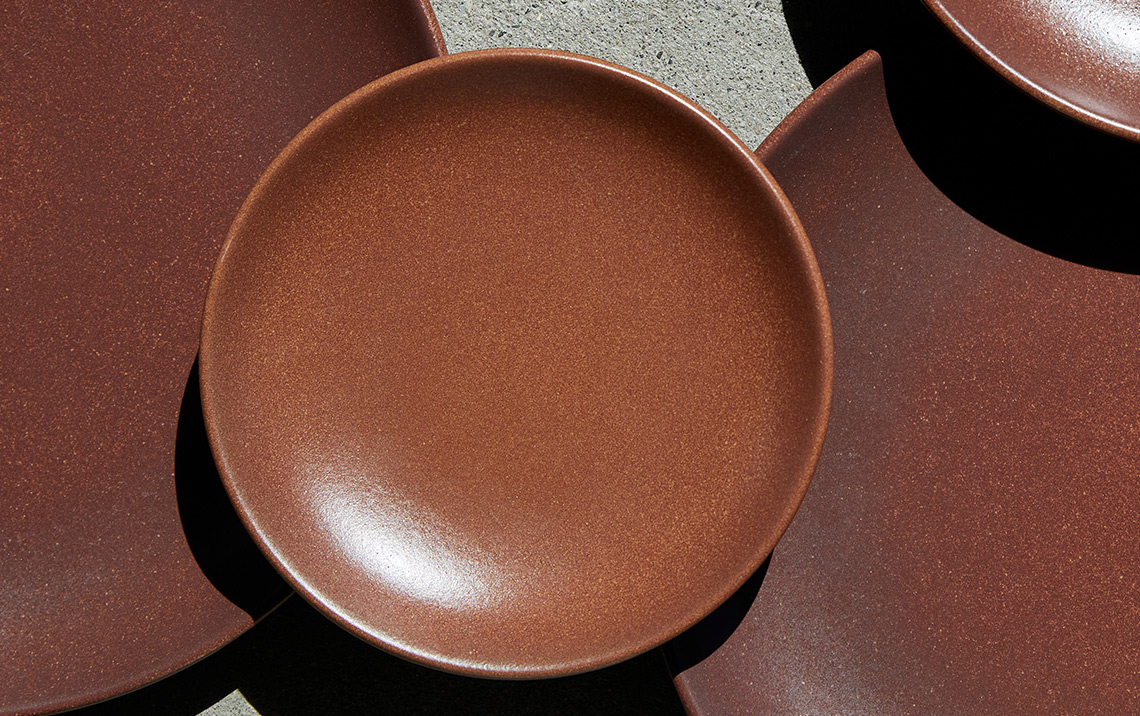
A human—not a machine—glazes each Heath piece. Some lean toward heavier applications, while others opt for a lighter touch. The first piece they work on in the morning may differ slightly from the last piece of the day. Air pressure and equipment settings add further variability. Even if the exact same glaze formula is used, differences (however imperceptible) will emerge depending on who glazed your piece, when, and which tools they used.
All Fired Up
Firing may seem straightforward, but it’s actually quite involved—and creates plenty of variation in its own right. Just like choosing the right rack in your oven, positioning is crucial for a successful firing, as each kiln has hot and cold spots that interact with glazes differently.
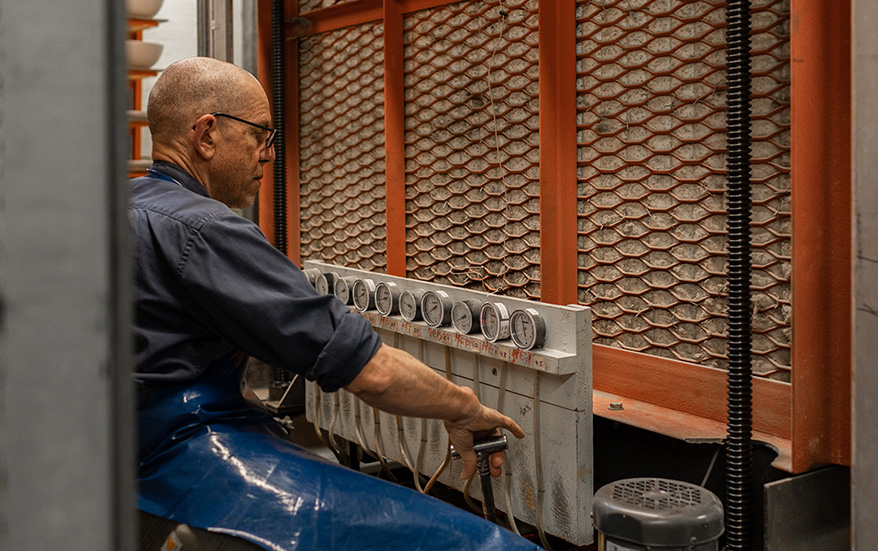
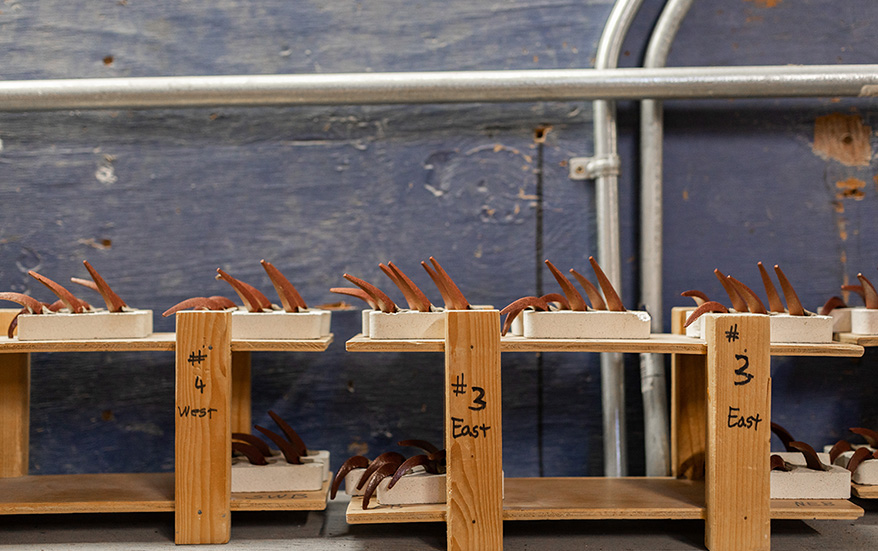
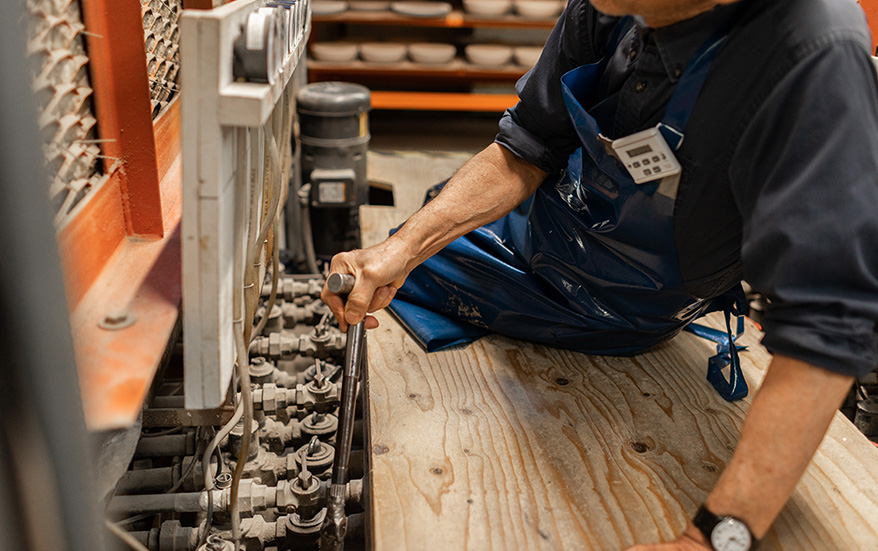
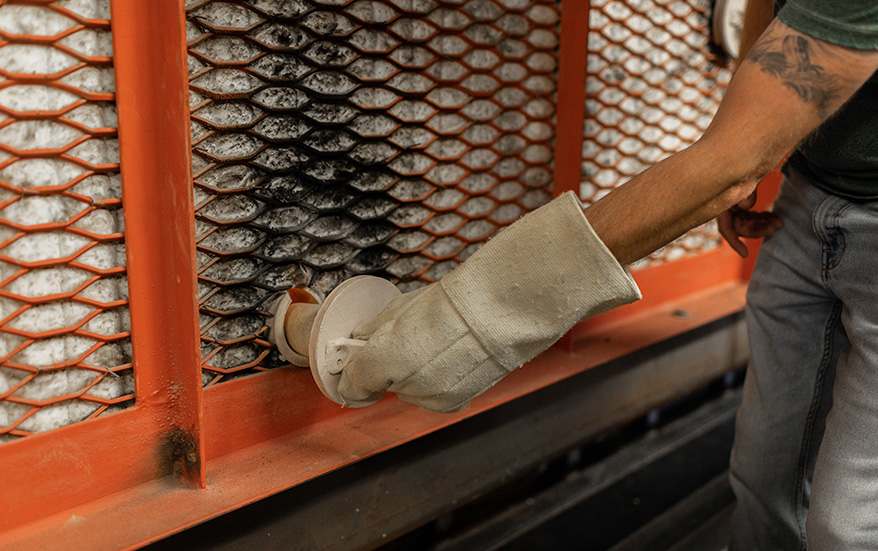
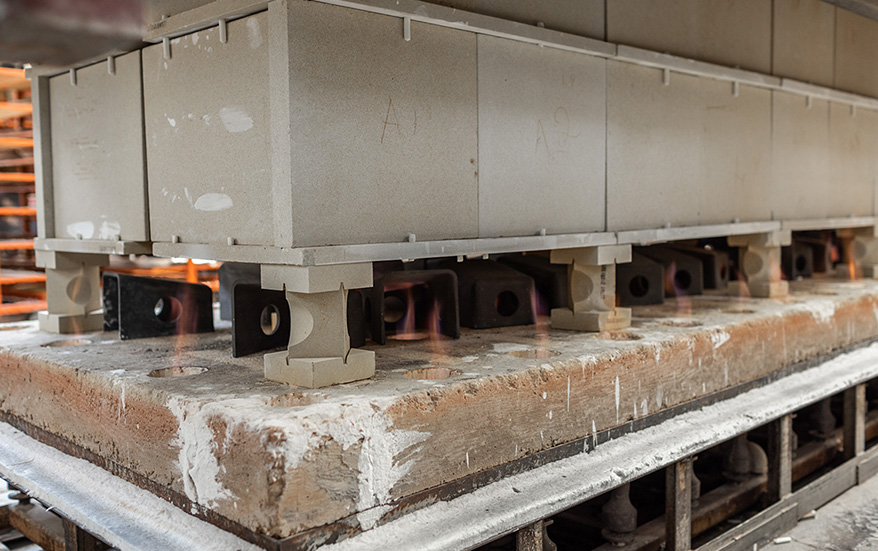
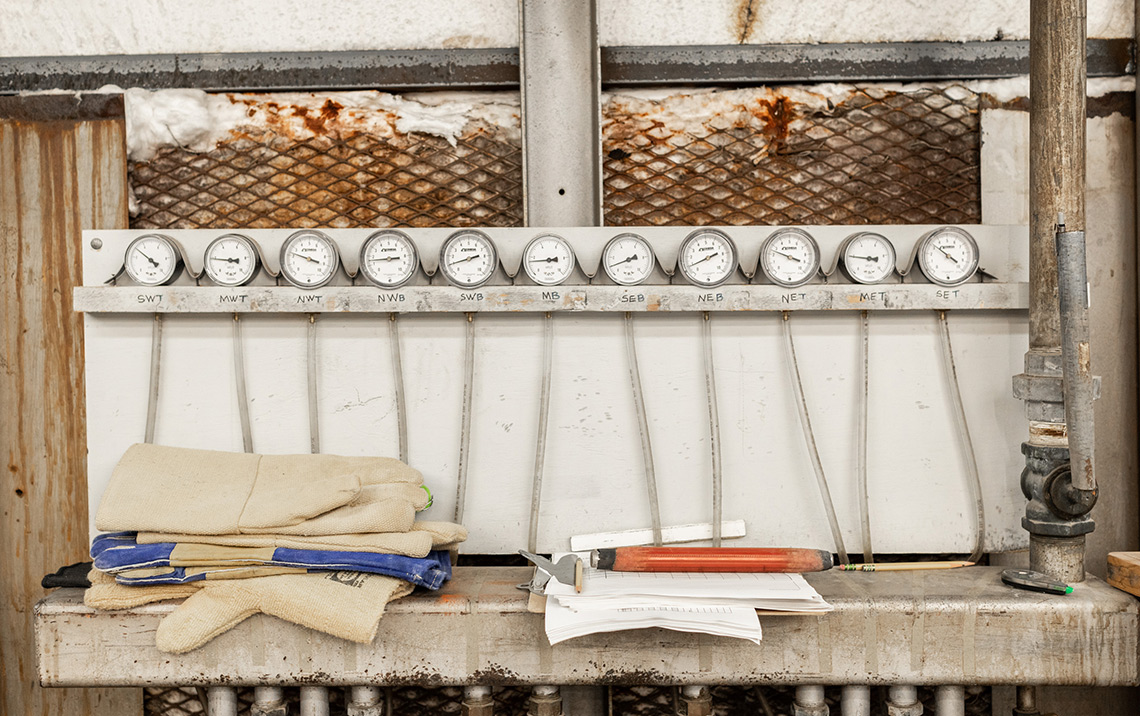
Adding to the complexity, a single kiln is filled with pieces of various shapes and sizes, and may be densely or loosely packed. We still use original kilns from Edith’s era (rebuilt in 2009 for energy efficiency), and while our team knows them intimately, variation is inevitable.
Greater than the Sum
There are many moving parts at play when making ceramics by hand. While maintaining consistent quality is extremely important to us, our small, human-scale factories welcome variability.
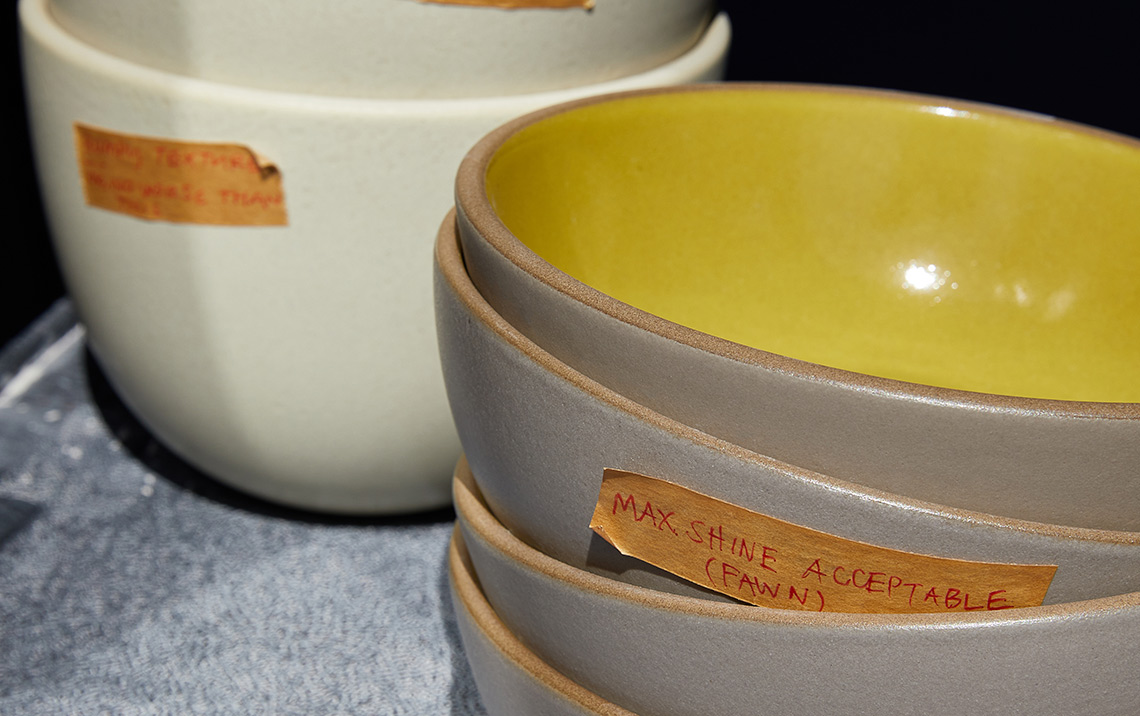
We're not after flawless consistency; we covet variation from the human hand—the kind that invites reflection. Variation of this kind celebrates raw materials and the alchemy of mixing, glazing, and firing, as well as the craftspeople who make the process possible.
If that weren’t enough, glaze variation happens to be absolutely beautiful—whether it’s lending new depth to a tile installation or a dinnerware set. You might spot slight differences between pieces you bought three years ago and pieces you buy today, or even within one stack of plates on showroom shelves. Welcome to Heath—it’s all part of the experience.
We hope you join us in celebrating the unique complexities of this ancient craft. If you’re interested in learning more about glaze variation, we invite you to stop by a showroom or reach out to us for more information.
Start Your Collection
We're not after flawless consistency; we covet variation from the human hand—the kind that invites reflection. Variation of this kind celebrates raw materials and the alchemy of mixing, glazing, and firing, as well as the craftspeople who make the process possible.
If that weren’t enough, glaze variation happens to be absolutely beautiful—whether it’s lending new depth to a tile installation or a dinnerware set. You might spot slight differences between pieces you bought three years ago and pieces you buy today, or even within one stack of plates on showroom shelves. Welcome to Heath—it’s all part of the experience.
We hope you join us in celebrating the unique complexities of this ancient craft. If you’re interested in learning more about glaze variation, we invite you to stop by a showroom or reach out to us for more information.


