

Edith Heath, who with husband Brian co-founded Heath, was not just a master of design but a master of the technical aspects of glazing, always finding innovative ways to create extraordinary colors and textures.
At Heath, we create all of our glazes according to proprietary recipes – just as Edith did back when we started. That means we’ve had over 50 years experience in it, and have learned a thing or a hundred about what works — and what doesn’t — when it comes to glaze.
At Heath, we create all of our glazes according to proprietary recipes – just as Edith did back when we started. That means we’ve had over 50 years experience in it, and have learned a thing or a hundred about what works — and what doesn’t — when it comes to glaze.
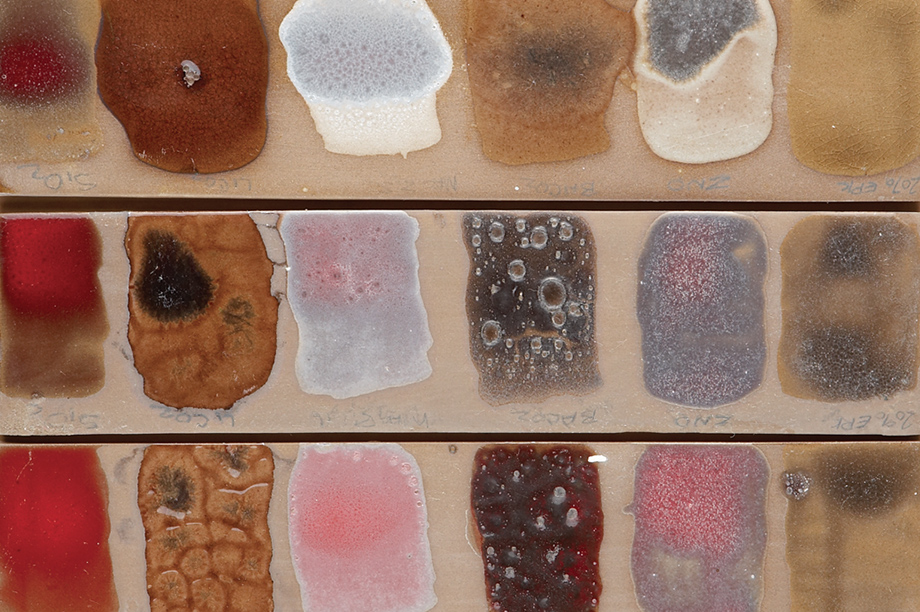
It's not just a matter of coming up with a color or texture we like, but a finely balanced, complex formulation that works on the specific clays we use, and the way we fire our tiles.
We’re always working on our glazes, whether it's creating new glazes, or reformulating existing ones, and it takes a village to do so. The joy of being a vertically-integrated company (where we design, make, and sell our own products) means that we have all the skills we need under one roof, and have long experience at working together. Our design teams work closely with our glaze masters, ceramic engineering and production teams to create and refine our glazes. It's a long, laborious process involving numerous steps and constant testing.
We’re always working on our glazes, whether it's creating new glazes, or reformulating existing ones, and it takes a village to do so. The joy of being a vertically-integrated company (where we design, make, and sell our own products) means that we have all the skills we need under one roof, and have long experience at working together. Our design teams work closely with our glaze masters, ceramic engineering and production teams to create and refine our glazes. It's a long, laborious process involving numerous steps and constant testing.
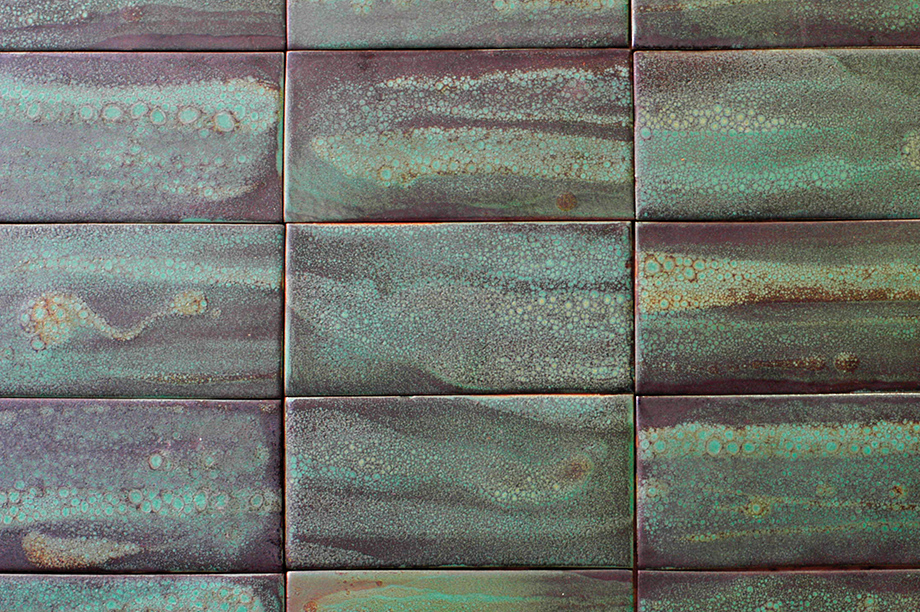
First a little glaze 101 and why it’s so complicated. Glazes are the glassy surface on the surface of a tile that give it its final color and finish, though depending on the opacity of the glaze, the color of the clay itself may show up through the glaze. (More on this later.) These surfaces come in a range of matte, shiny, or satin finishes, and can also be layered.
Glaze is made up of a number of minerals and metals that define color, opacity, and finish. It’s the result of a chemical interaction between these mineral ingredients, which include silica, flux, and clay — and fire where each ingredient undergoes a molecular reaction under high heat. Glaze chemistry and firing are not precise: ceramic engineers use a mix of knowledge of chemistry, analysis, experience, and multiple trials to get is as close to a science as possible. So the next time you ask if that matte yellow can be done in a glossy glaze, the answer is likely “no”. Changing the finish will likely affect the color.
Glaze is made up of a number of minerals and metals that define color, opacity, and finish. It’s the result of a chemical interaction between these mineral ingredients, which include silica, flux, and clay — and fire where each ingredient undergoes a molecular reaction under high heat. Glaze chemistry and firing are not precise: ceramic engineers use a mix of knowledge of chemistry, analysis, experience, and multiple trials to get is as close to a science as possible. So the next time you ask if that matte yellow can be done in a glossy glaze, the answer is likely “no”. Changing the finish will likely affect the color.
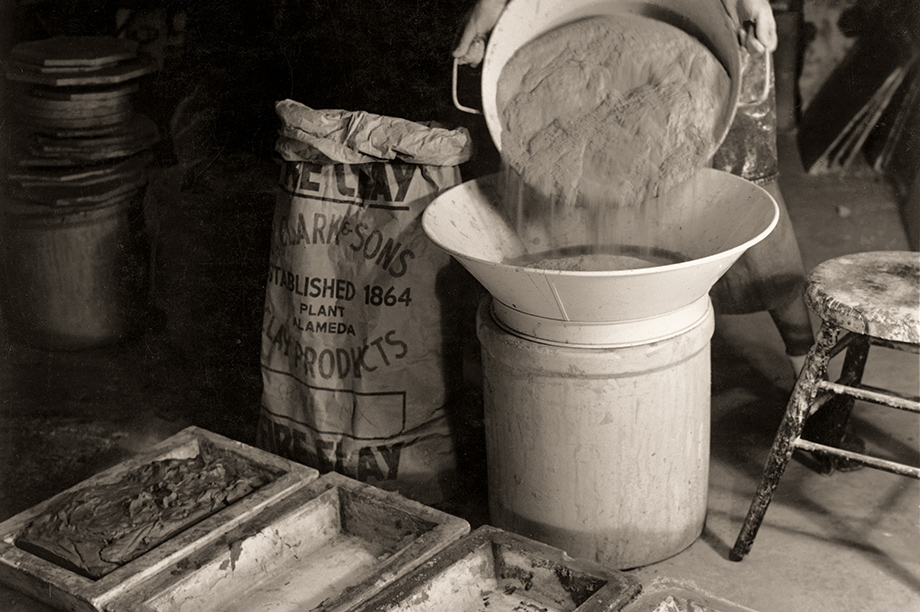
Glaze starts out a little like a cake mix — a precise combination of powdered ingredients. Our glazes are often made up of natural materials, mined from the earth. And the challenge begins there: natural materials are trickier to work.
The basic recipe is a combination of silica, flux, and clay. Each category of ingredients provides and controls certain characteristics.
Silica is like sand, and provides a glossy, glassy finish. Flux is a category of glass-forming materials, and lowers the overall melting point of a glaze, enabling a melting or flowing visual effect in glaze. Clay used in glazes often comes from kaolin, which is a type of porcelain clay; other materials include pumice, feldspar, iron oxide, manganese, copper oxide, and ball clay. The ratios of these ingredients vary depending on desired results.
The basic recipe is a combination of silica, flux, and clay. Each category of ingredients provides and controls certain characteristics.
Silica is like sand, and provides a glossy, glassy finish. Flux is a category of glass-forming materials, and lowers the overall melting point of a glaze, enabling a melting or flowing visual effect in glaze. Clay used in glazes often comes from kaolin, which is a type of porcelain clay; other materials include pumice, feldspar, iron oxide, manganese, copper oxide, and ball clay. The ratios of these ingredients vary depending on desired results.
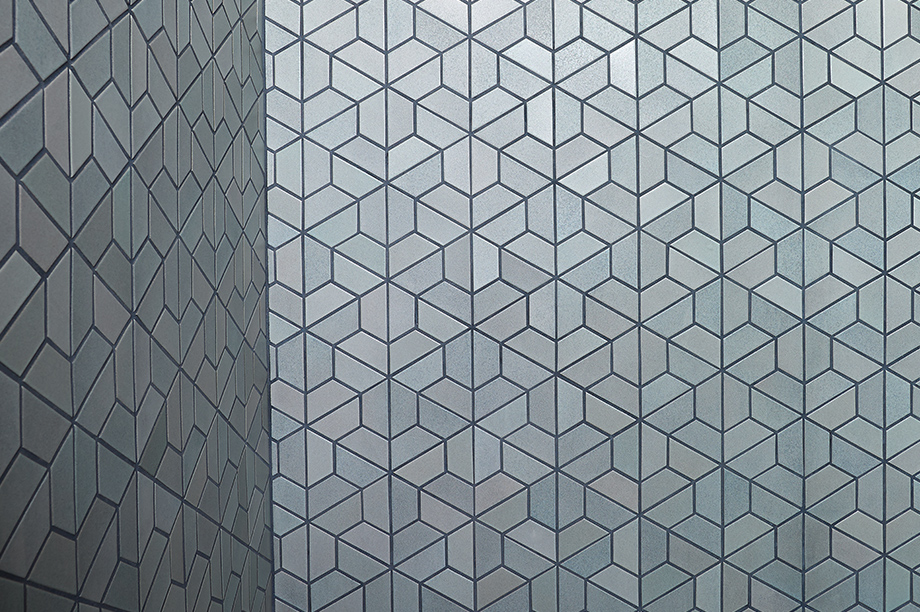
The ingredients arrive to Heath lightly processed, but our glaze-making teams still test all of the materials we receive. We look for purity, grain size, and consistency in all of our raw materials before we mix them into glazes.
Even though we control the formula, specify the ingredients, and work with suppliers we know, the materials we use can vary tremendously over time — which is why we’re often working to completely reformulate, or at least “tweak” the glazes we have. Cobalt, for example, will vary depending on what part of a given mine it’s coming from, while copper will oxidize over time, creating significant variation in our glazes.
We receive some of the materials in a pre-blended form in order to maximize consistency: stains and frits are mixtures of raw materials that have been fired once, then ground back into a powder in order to stabilize some natural materials. With standardized batches, greater consistency is possible, and some of the less friendly materials are safer for employees who handle them in powder form.
Some stains are highly concentrated, while others have a low potency: this range means that there’s a huge number possible results from them. Bases are used to control physical and visual characteristics, such as finish — matte, glossy, frost-glossy, satin-matte, and crackle (only used for tile). Once a base has been selected, stains and other natural materials are added to create color.
Even though we control the formula, specify the ingredients, and work with suppliers we know, the materials we use can vary tremendously over time — which is why we’re often working to completely reformulate, or at least “tweak” the glazes we have. Cobalt, for example, will vary depending on what part of a given mine it’s coming from, while copper will oxidize over time, creating significant variation in our glazes.
We receive some of the materials in a pre-blended form in order to maximize consistency: stains and frits are mixtures of raw materials that have been fired once, then ground back into a powder in order to stabilize some natural materials. With standardized batches, greater consistency is possible, and some of the less friendly materials are safer for employees who handle them in powder form.
Some stains are highly concentrated, while others have a low potency: this range means that there’s a huge number possible results from them. Bases are used to control physical and visual characteristics, such as finish — matte, glossy, frost-glossy, satin-matte, and crackle (only used for tile). Once a base has been selected, stains and other natural materials are added to create color.
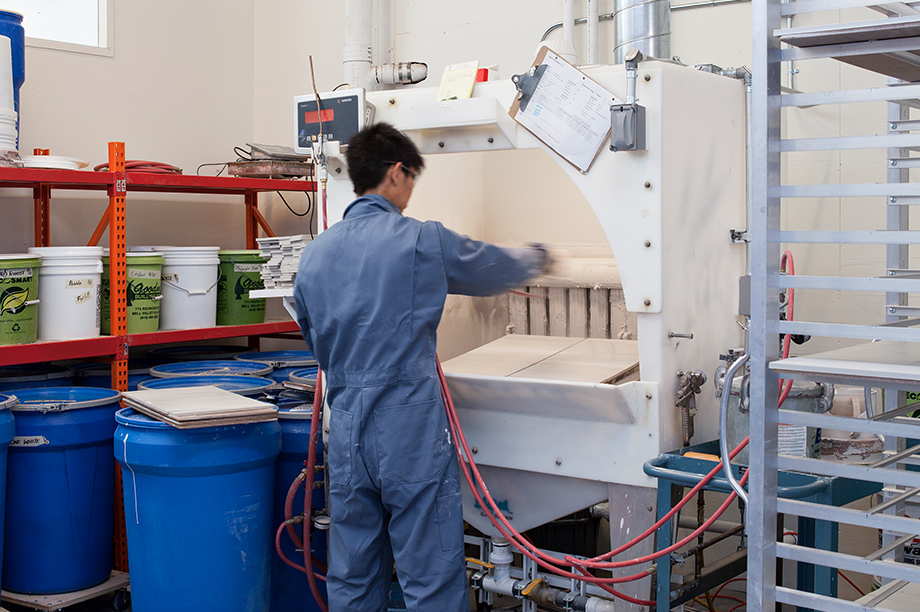
The method of glaze application is another factor in the way glaze looks. Each of our glazers hand-sprays tiles with spray guns, spraying until a specific glaze weight is achieved (based on the specific glaze being used.) If you’ve worked with ceramics and glaze, you’ll know that what you see is when applying the glaze is NOT what you get after firing: you won’t see how well you’ve applied the glaze until after it emerges from the kiln. No wonder it takes about 6 months of training for our glazers to be fully proficient.
You can achieve a more uniform look with “waterfall” glaze lines (used, typically, for high volume ceramic tile for sale at big-box home improvement stores). But we believe in the importance of the hand in creating our glazes, and because we know the outcome will be far more beautiful to anything produced on a high-volume, mass produced basis.
The final part of the glaze story takes place in the kiln, during the firing process, when materials melt, mature, and heal themselves into a glassy structure. We fire our kilns up to 2,080 degrees Fahrenheit over an eight hour firing. The firing process is when the glaze gets its color and surface finish. It’s also when anything can happen and dictates whether our tile is bound for a happy client, our seconds shed, a mosaics class, to be used as “grog"... or perhaps as the inspiration for our next glaze, the result of a happy accident. It’s all in a day’s work at Heath.
You can achieve a more uniform look with “waterfall” glaze lines (used, typically, for high volume ceramic tile for sale at big-box home improvement stores). But we believe in the importance of the hand in creating our glazes, and because we know the outcome will be far more beautiful to anything produced on a high-volume, mass produced basis.
The final part of the glaze story takes place in the kiln, during the firing process, when materials melt, mature, and heal themselves into a glassy structure. We fire our kilns up to 2,080 degrees Fahrenheit over an eight hour firing. The firing process is when the glaze gets its color and surface finish. It’s also when anything can happen and dictates whether our tile is bound for a happy client, our seconds shed, a mosaics class, to be used as “grog"... or perhaps as the inspiration for our next glaze, the result of a happy accident. It’s all in a day’s work at Heath.
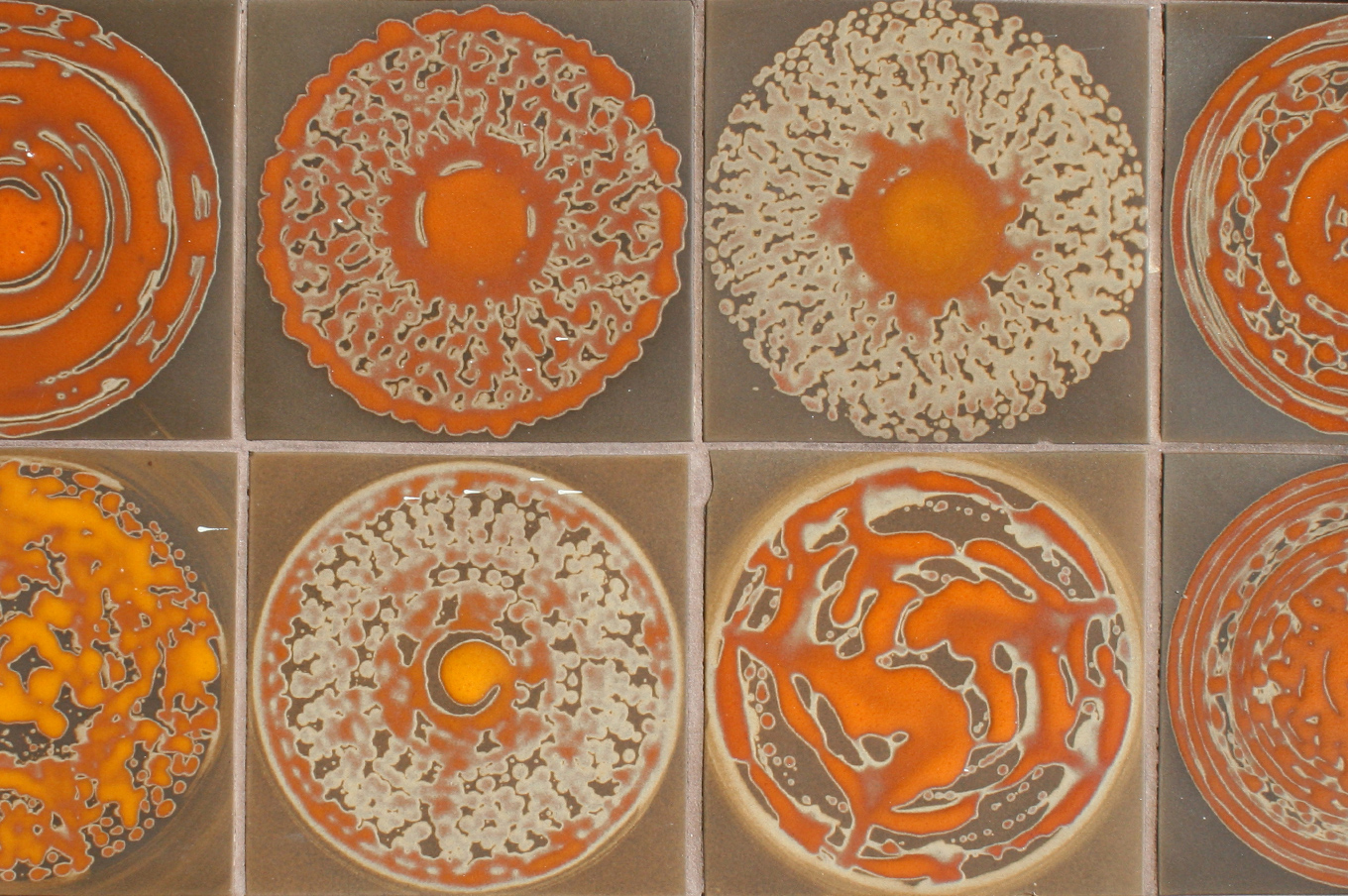
Glazing is a complicated process, rarely 100% predictable, and one we complicate further with our love of natural oxides, small batches and hand glazing, the way we hand-glaze, and the way we fire. It can be maddening, but it’s what gives our tile the beauty, variation, and texture our clients and customers rely on to give their surfaces, rooms and even buildings’ character and richness.
— Emily Holmes (thanks to Ada Ko and Rosalie Wild, too!)
Header photo: Mark Allen Johnson
— Emily Holmes (thanks to Ada Ko and Rosalie Wild, too!)
Header photo: Mark Allen Johnson


